

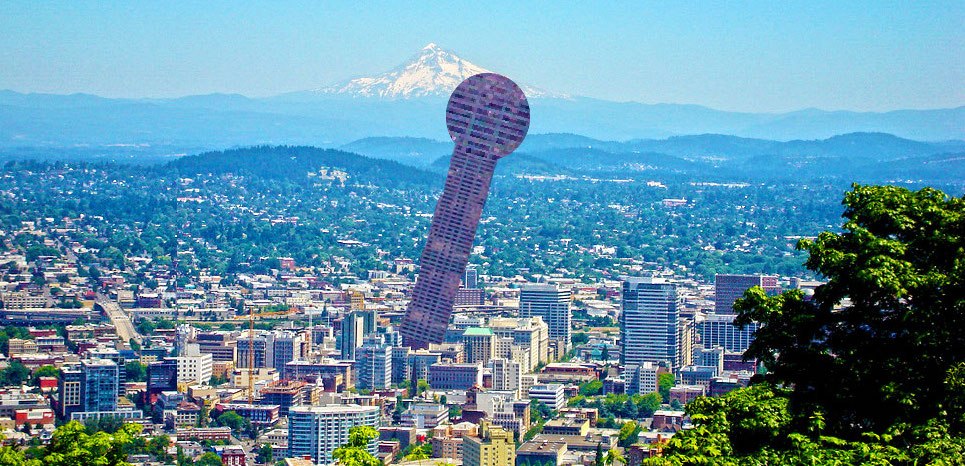
“Over-focusing on the wealthy cores of cities only fuels inequality, displacement, and other runaway urban problems—and degrades the cores too,” writes Michael Mehaffy for Livable Portland. “The story is distressingly similar in many cities around the world. Newly popular city cores are drawing more people, pushing up prices, and driving out small businesses and lower-income residents. City leaders, alarmed at the trends, try to build their way out of the problems, on the theory that more supply will better match demand, and result in lower rents and home prices. But the efforts don’t seem to work—and even seem to exacerbate the problems.” “That’s because cities aren’t simple machines, in which we can plug in one thing (say, a higher quantity of housing units) and automatically get out something else (say, lower housing costs). Instead, cities are ‘dynamical systems,’ prone to unintended consequences and unexpected feedback effects. By building more units, we might create ‘induced demand,’ meaning that more people are attracted to move to our city from other places – and housing prices don’t go down, they go up.” “Unfortunately, we have been treating cities too much like machines, and for an obvious reason. In an industrial age, that has been a profitable approach for those at the top, and in past decades, it seemed to fuel the middle class too. More recently, the results have been destructive, creating cities of winners and losers, and large areas of urban (and rural) decline. Even government programs meant to address the problems have seemed at times like a game of ‘whack-a-mole’—build some social housing here, see more affordability problems pop up over there.” “In the years after World War II, and especially in the United States, the largest areas of decline were often in the inner cities, leaving the ‘losers’ of the economy behind, while the ‘winners’ (often wealthier whites) fled to the suburbs. But more recently it has been the cores of large cities that have become newly prosperous, attracting the winners of the ‘knowledge economy.'”